
AIO, SEO, LLMO & GEO– category –
-

1Password lets AI agents log in without receiving credentials with “1Password for Agents”
Announced by 1Password on October 22, “1Password for Agents” is a new feature that lets AI agents log in on users’ behalf without showing them passwords, with approval required. Here’s a look at how it works, which services it supports and the eligibility requirements, as well as how much access to grant AI. -
Google’s AI Overview may show query-specific summaries on citation cards
Reports say AI-generated summaries have appeared on citation cards in Google’s AI Overview, which show the evidence behind its answers. It is not clear whether this is a test or a gradual rollout, but here is a look at the development and its implications for how sources are presented. -
Google’s Gary Illyes explains that robots.txt cannot control whether content is used to train AI
robots.txt governs which URLs crawlers may access; it does not cover whether fetched content can be used for AI training. This article reviews Google-Extended, the IETF draft, and how to write Japanese URLs, based on Google’s Gary Illyes’s explanation. -
OpenAI Scores 97.9% on COBOL Migration Evaluation, Significantly Improving Support for Legacy Languages
OpenAI announced improvements in coding capabilities for languages with limited training data, such as COBOL. In an evaluation of COBOL migration, accuracy reached 97.9% when the amount of reasoning was increased. We examine the “difficulty of producing the same results” behind the figure. -
Google Tests Verification Using Photos of Government-Issued IDs
A method of submitting a photo of a government-issued ID has been spotted in testing for Google Business Profile verification. It could join existing options such as phone and mail. Here’s what the distinction between verifying someone’s identity and confirming their connection to a business tells us about the new method. -
SEO Crisis! Meta’s Muse and OpenAI’s Dots Are Operating the Web, and Traditional Bot Defenses Don’t Work
Personal AI agents such as Meta's Muse and OpenAI's Dots handle tasks on the web for users, from comparing products and filling out forms to making purchases. SEO is shifting from building pages that get found to pages that agents can use. We examine blind spots in accessibility, bot defenses, and measurement. -
A fictional concept was cited by 8 of 10 AI search tools within a week of being posted: Fudan University experiment
A research team at Fudan University posted fictional concepts to the web and tracked how 10 AI search tools responded over one week. Eight cited them, including all four tools aimed at English-speaking users. What mattered was where the posts appeared, more than how many there were. -
DeepSeek launches search API, adds authority and relevance scores to results, and filters out GEO manipulation
On October 17, DeepSeek released its own search engine for developers. Results include authority and relevance scores for each page, and the service supports site-specific searches. Here’s a look at a new yardstick for measuring “discoverability” in the AI era. -
Google improves link displays in AI Mode and AI Overviews, tests pathways to official sites and creators
Google has revised how links are displayed in AI Mode and AI Overviews. It is increasing the chances that links appear near the top of answers, and is also testing prominent placement for official websites and links to creator profiles. Here’s a breakdown of what’s changing—and what isn’t. -
Google updates AI Mode and AI Overviews, strengthening paths from answers to websites and news
Google is updating AI Mode and AI Overviews. The changes include more frequent placement of links near the top of answers, guidance to official pages, a news carousel, and paths to creators’ profiles. Here’s a breakdown of confirmed changes and measures still being tested. -
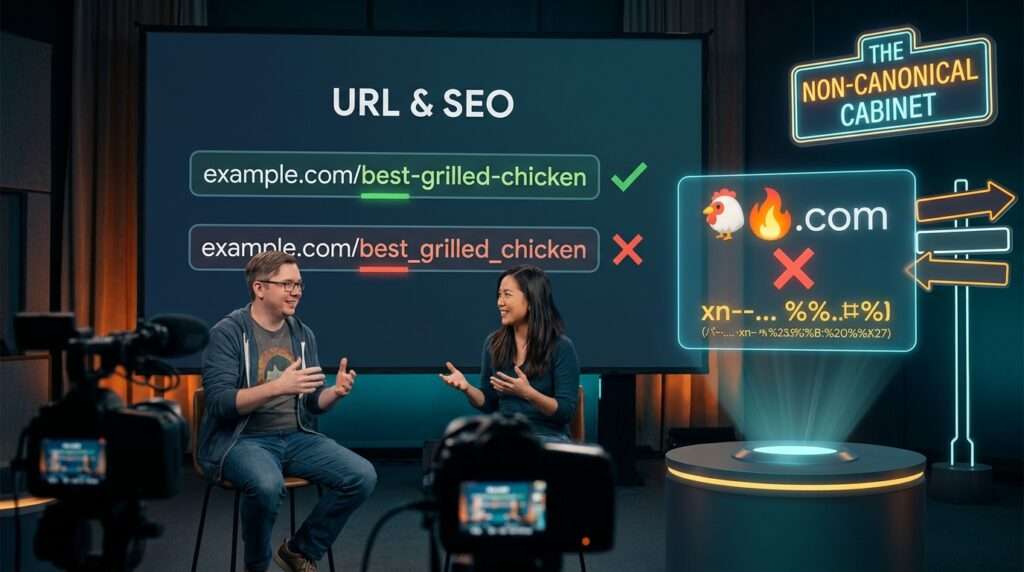
Google Explains That URL Keywords Have Little Effect, Recommends Hyphens to Separate Words
Google’s Gary Illyes and Cherry Prommawin explained in a video how URLs are handled in search. They said keywords have a “very small” impact on rankings. Here is a look at URL design, including the use of hyphens and the handling of emoji. -
Google Search Converts PDFs to HTML for Indexing, and They Can Appear in AI Overviews and AI Mode
Google doesn’t read PDFs as-is; it converts them to HTML for search processing. This article covers how links are handled, how PDFs appear in AI search, caveats for image-only PDFs, and practical reasons to choose HTML.











12