
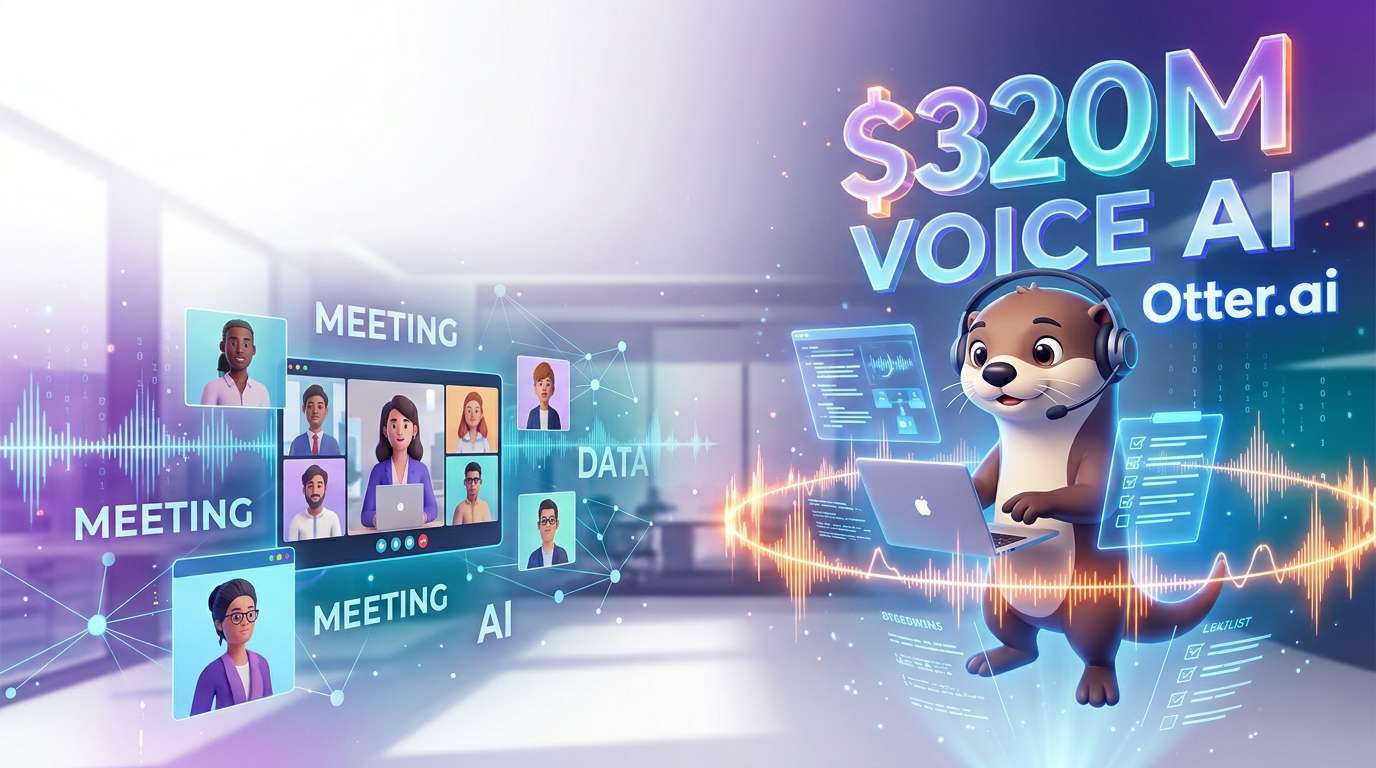
Otter AI, known for meeting notes and transcription, has raised $320 million from investment firm General Catalyst. The funding is reportedly aimed at expanding its voice AI offerings for businesses. Depending on exchange rates, that amounts to several tens of billions of yen.
What the $320 Million Figure Signals
The two central facts in the report are that Otter AI raised $320 million from General Catalyst and that the funding is intended to expand its enterprise voice AI business. Even before details of the terms emerge, the amount alone is enough to draw industry attention.
A service that merely turns speech into text shouldn’t need this much funding. It seems the company is aiming beyond meeting-notes software and toward a platform embedded in business operations themselves. Isn’t that the most natural reading?
What Is Otter AI?
Otter AI is known for automatically transcribing audio from online meetings and in-person discussions, then summarizing the key points. Many people use it alongside meeting tools such as Zoom, and it has changed the familiar routine of having someone take notes at every meeting.
The key point to understand is that voice AI is moving beyond simply turning “the words it hears into text.” It can organize meeting discussions and even suggest what to do next. These uses are becoming more widespread in businesses.
Why Enterprise Voice AI Is Drawing Attention
Companies have a vast amount of “voice” data that often goes untapped: internal meetings, sales calls, customer service calls and job interviews. These conversations happen in large numbers every day, but many disappear without ever being recorded.
Once audio is preserved as text, it can be searched, summarized and shared. In this way, voice becomes a business asset. I believe investor interest in enterprise voice AI stems from the sheer scale of this “previously untapped data.”
A Look at Potential Use Cases
In general, enterprise voice AI could be used in several ways: sales teams could record and share details of sales calls, customer support teams could summarize calls, and HR teams could organize interview records. In each case, the technology can reduce the time employees spend taking notes and make it easier for them to focus on their core work.
However, these are general use cases for voice AI and are separate from the question of which areas Otter AI will direct this funding toward. The stated goal is to expand its enterprise business, but we’ll have to wait for future announcements to learn what that entails.
What Companies Should Consider Before Adopting It
For services that handle meeting audio, data management matters just as much as convenience. Where are recordings containing confidential discussions or customers’ personal information stored, and who can access them? For companies considering a full-scale rollout, this is the first hurdle.
A large funding round can also give a company the resources to invest in these security measures. Of course, how the money is actually spent is up to the company. Still, if it is targeting enterprise customers, strengthening administrative controls and permission settings will be an unavoidable priority.
Toward a Future Where Voice Is the Starting Point for Work
The idea that spoken words can become work products directly, without having to type them out, is gradually becoming a reality. Having meeting notes and a list of action items ready the moment a meeting ends is the kind of experience that makes it hard to go back.
The $320 million also looks like a statement of intent to make this shift standard in the business world. Can voice AI move from being a “convenient personal tool” to becoming “company infrastructure”? This funding round may be remembered as one of the turning points.









Comments